
Lower back pain is a common ailment I’ve seen in bodywork, regardless of where in the world I’m working. If your back is stiff when you get out of bed and sore by the end of the day, you’re definitely not alone. Around four million Australians live with back problems; it’s the thing my clients ask me about most!
Here’s what I’ve learned: a sore lower back is often a back that’s working too hard. When the hips and glutes stop pulling their weight, often after long hours of sitting, the lower back steps in to do their job. Over time, it gets tired, tight and cranky.
People assume that if they pop a painkiller and get enough bed rest, the pain will go away. And true enough, it does… until it comes back. A sustainable solution would be to move your back instead, gently but purposefully.
Below are my go-to moves for anyone dealing with back pain. Done one after another, they make a gentle 10-minute workout you can do anywhere. You’ll need nothing more than a mat and one optional ball!
Before you start
Move slowly and remember to breathe. These are gentle moves, not a workout.
Stay in a comfortable range. A mild stretch, push or effort is fine. Stop and ease off or dial down your effort if you feel a sharp or increasing pain. If the sharp pain continues, see a medical professional.
Little and often wins. A few minutes most days helps more than an hour once a week; remember to be consistent with your efforts. So if you decide to do this in the morning, try to commit to it every day for a week, to start with.
Read “When to see your GP” first if your pain is severe or new.
1. Pelvic tilts
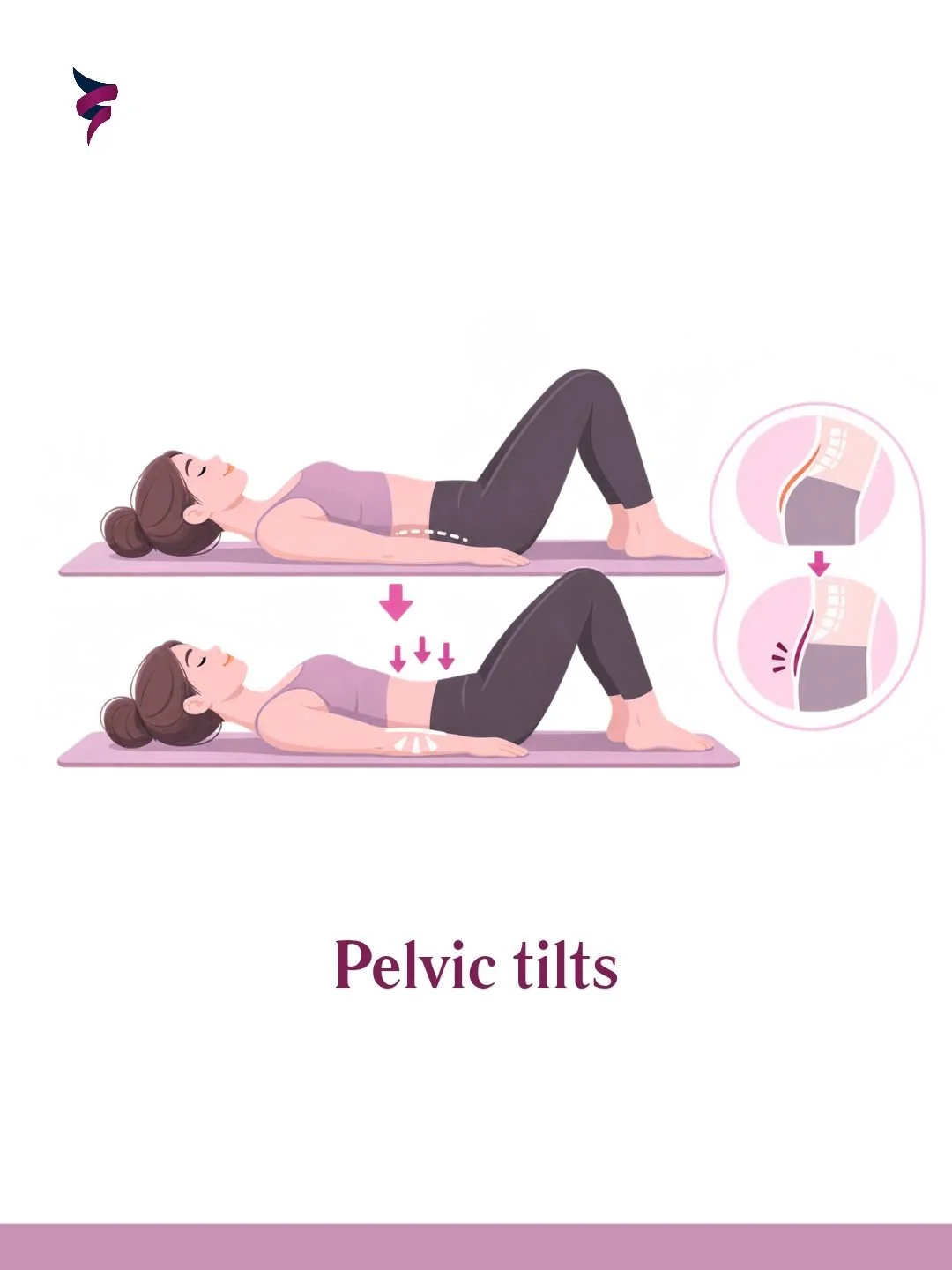
What it does: Wakes up the deep muscles (transversus abdominis) that support your spine.
How to do it:
Lie on your back with your knees bent and feet flat, hip-width apart.
Breathe in. As you breathe out, gently flatten your lower back into the floor by tilting your pelvis, as if tucking your tailbone under.
Breathe in and release back to where you started.
How many: 10 slow repetitions.
What you should feel: A gentle tuck in the lower part of your belly.
Common mistake: Pushing with your legs or lifting your bottom.
[Photo/video: Fran demonstrating pelvic tilts]
2. Knee rocks
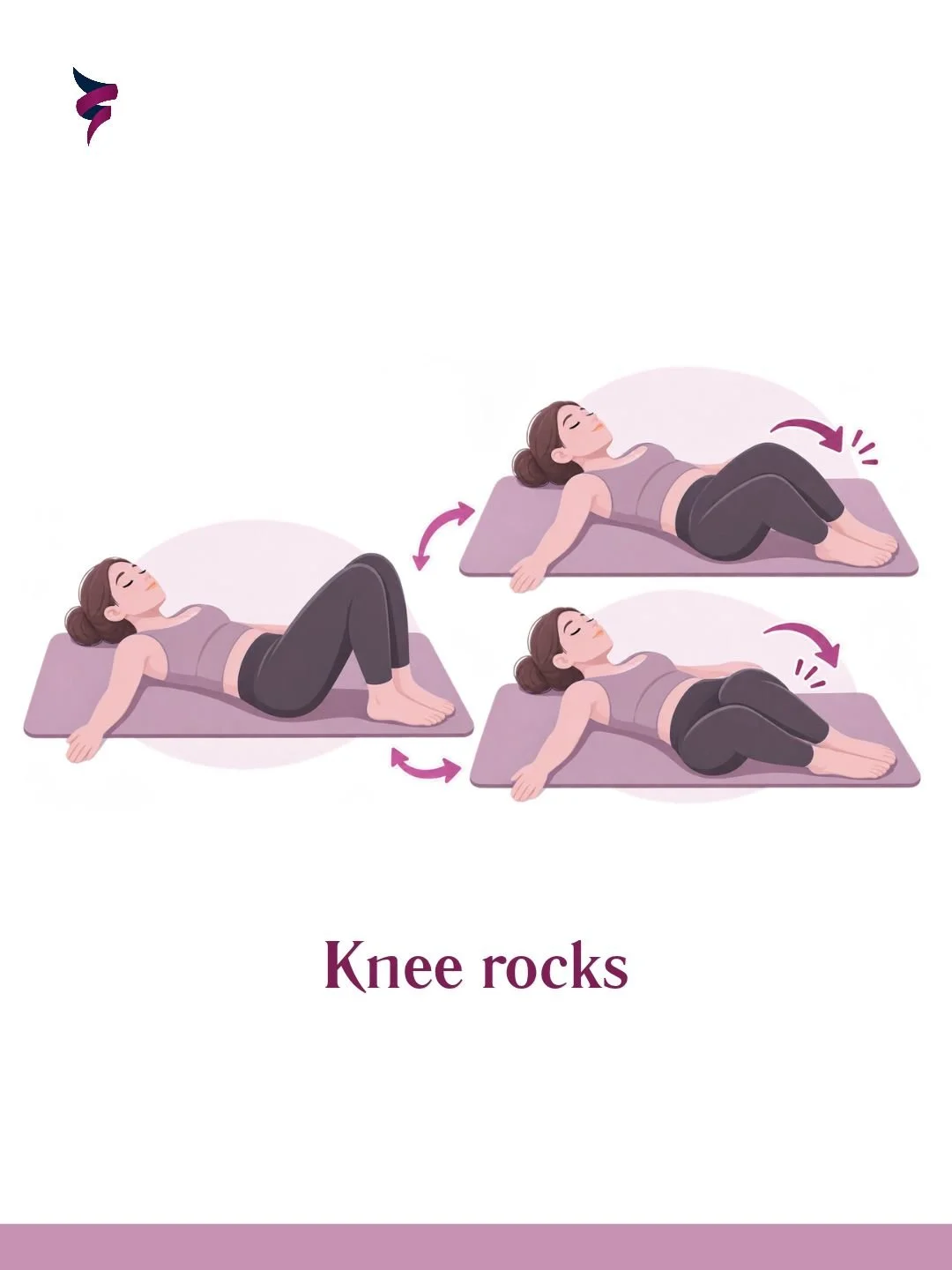
What it does: Eases stiffness with gentle rotation through the lower back.
How to do it:
Stay on your back with your knees bent and together, feet flat and arms stretched out to the sides.
Slowly let both knees fall to one side, keeping both shoulders on the floor.
Bring them back to the middle, then drop them to the other side.
How many: 10 slow rocks each way.
What you should feel: A soft stretch across your lower back and hips.
Common mistake: Dropping the knees too far; go as far as you can. Ideally, you should feel the stretch, not be in pain.
[Photo/video: Fran demonstrating knee rocks]
3. Glute release with a ball
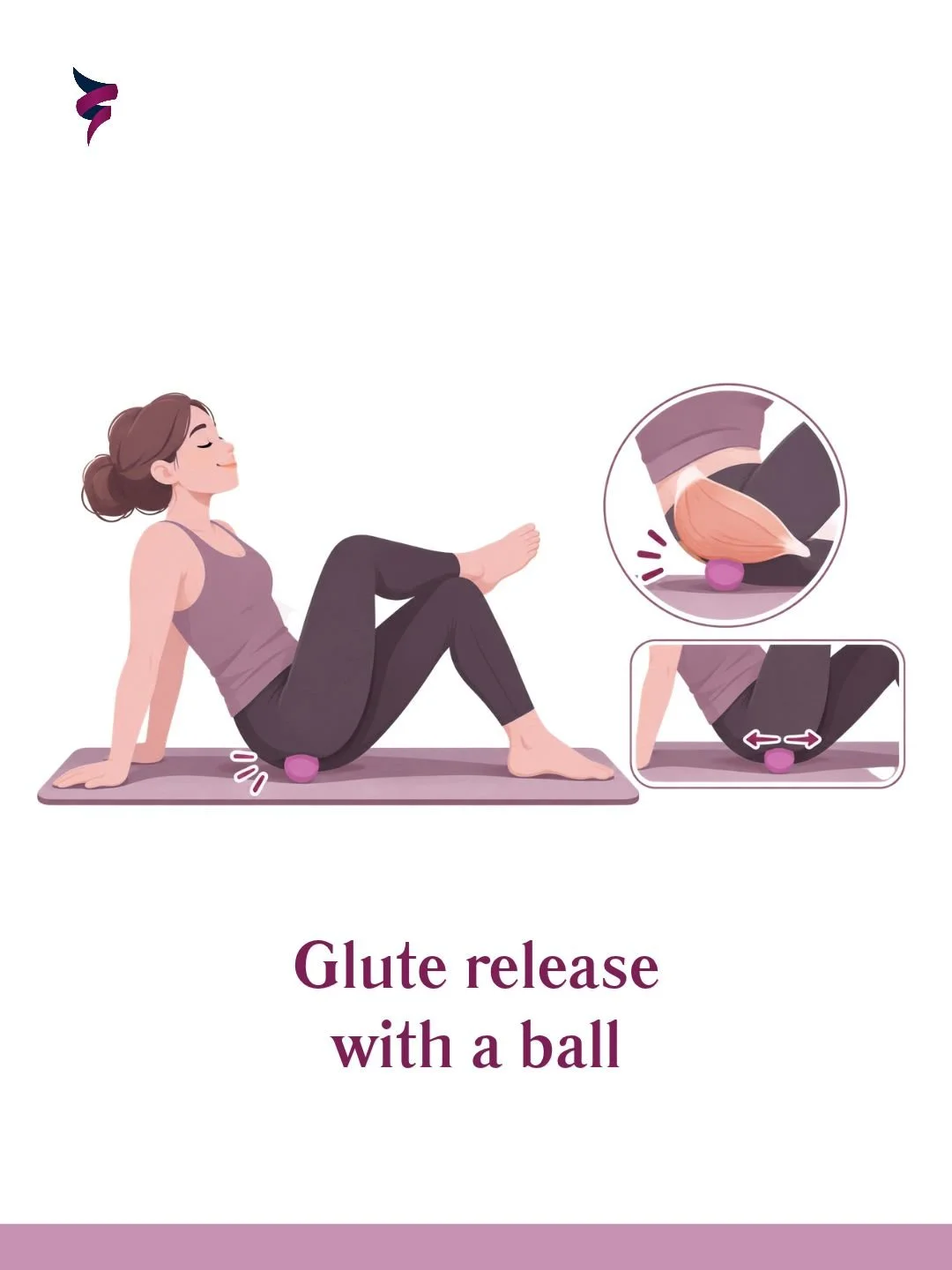
What it does: Releases tight glute muscles (gluteus maximus and medius), which often pull on the lower back.
How to do it:
Lie on your back with your knees bent and place a release ball under one side of your bottom.
Lean gently into the ball until you find a tender spot. Aim for a “good pain” sensation of around 5 out of 10 (10 being the most painful).
Stay still and breathe slowly for 30 to 60 seconds, letting the muscle soften. Then move the ball to a new spot.
How many: 1 to 2 minutes each side.
What you should feel: Tension easing in your buttock. Often your lower back feels looser afterwards, too.
Common mistake: Rolling fast or pressing too hard. Slow and steady eases tissue tension and loosens tight muscles.
Tip: I use the R&R Maxi Ball for this. It’s firm enough to reach the deep glute muscles without slipping. A tennis ball is fine to start with.
[Photo/video: Fran demonstrating glute release with the R&R Maxi Ball]
4. Cat-cow
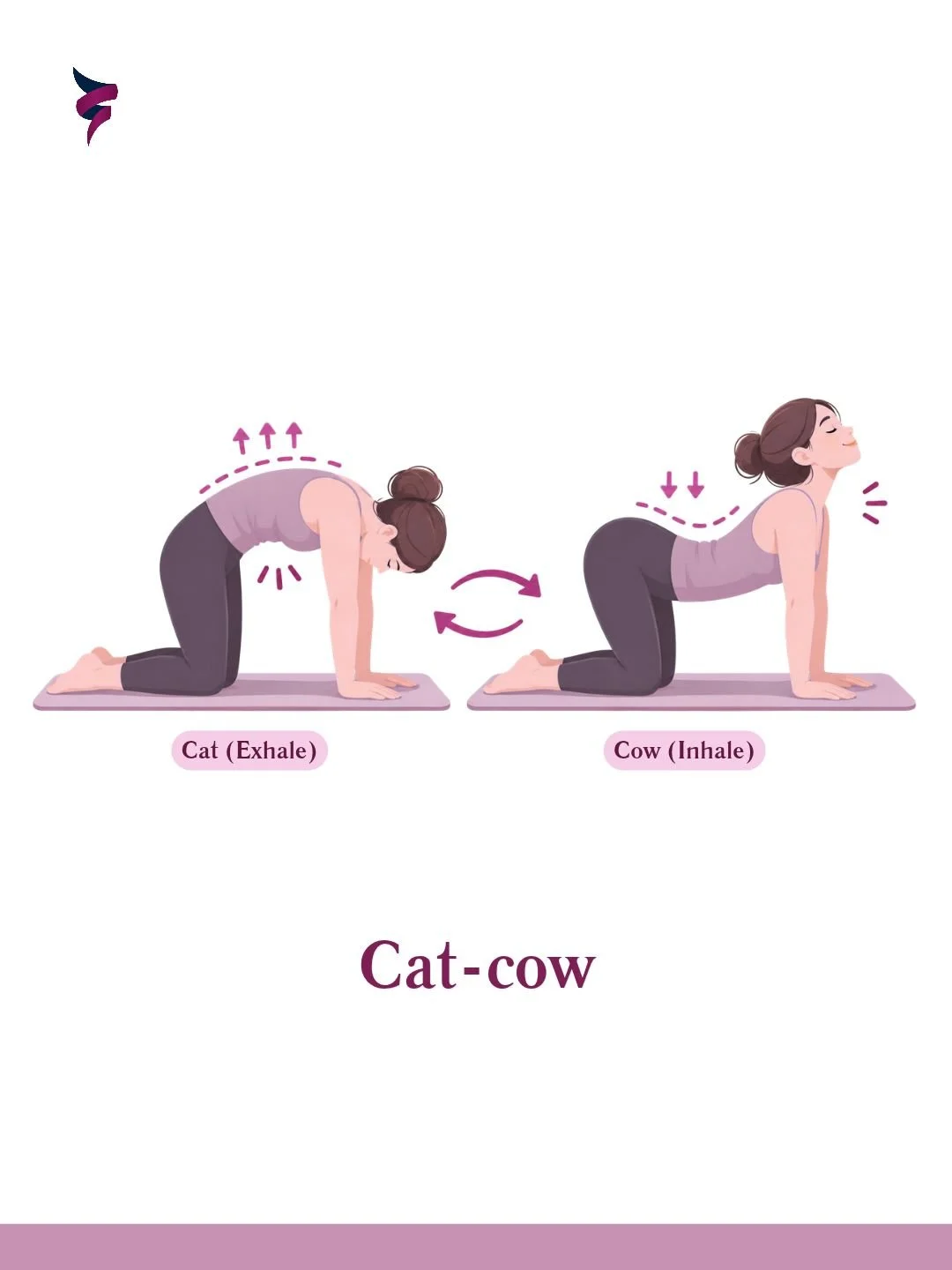
What it does: Moves your whole spine gently, easing stiffness from top to bottom.
How to do it:
Come onto your hands and knees, with your hands under your shoulders and knees under your hips.
Breathe out and slowly round your back up towards the ceiling, letting your head drop (cat).
Breathe in and let your belly gently lower as your chest lifts (cow).
How many: 8 to 10 slow rounds.
What you should feel: A smooth wave of movement through your spine, easing tension along it.
Common mistake: Forcing the arch. Keep the “cow” soft, especially if arching your back is uncomfortable. As you continue this (and other) exercises, you’ll be able to stretch deeper and deeper.
If kneeling hurts, put a folded towel under your knees or use knee pads!
[Photo/video: Fran demonstrating cat-cow]
5. Glute bridge
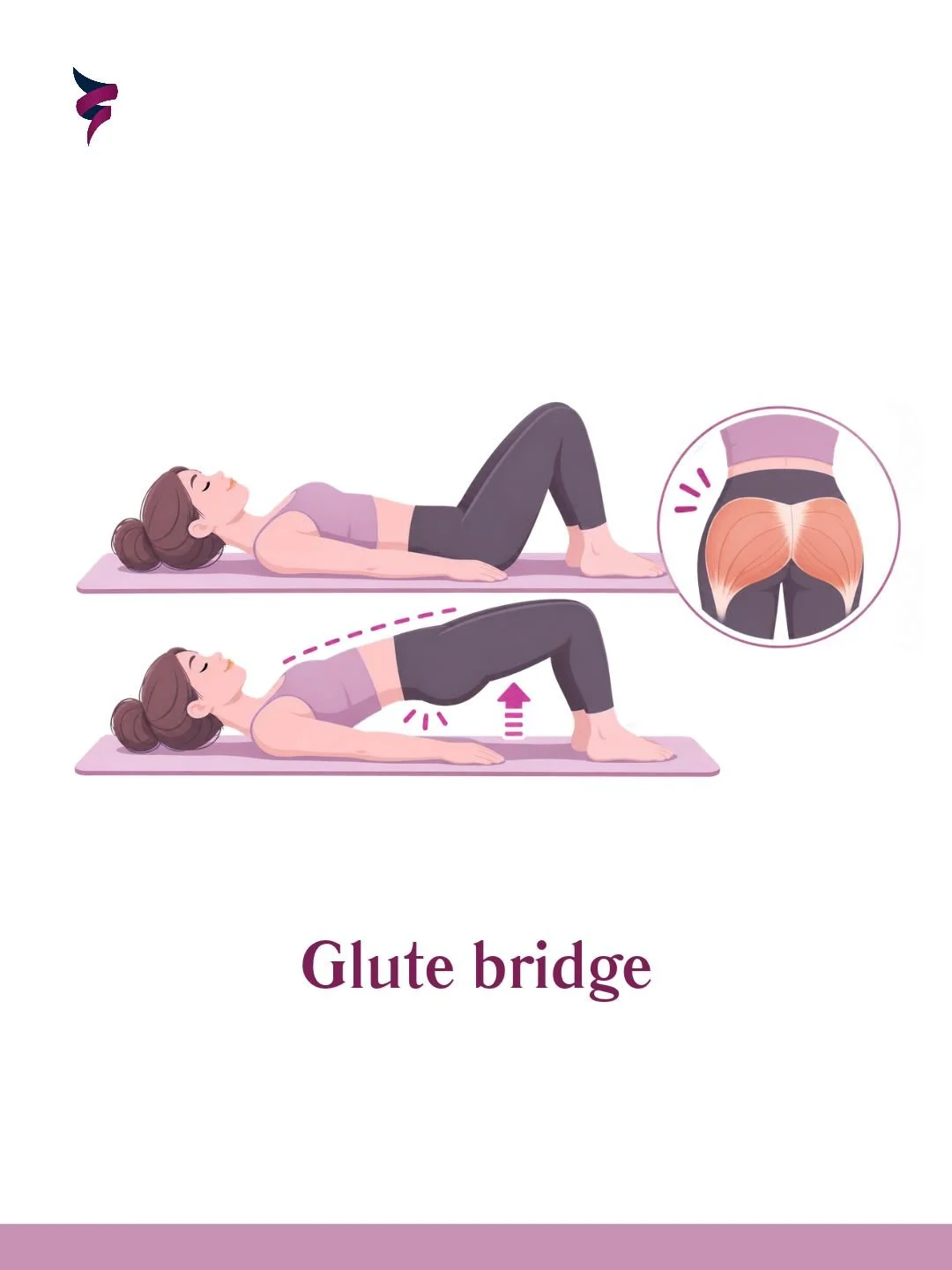
What it does: Strengthens your glutes so your lower back doesn’t have to do all the work.
How to do it:
Lie on your back with your knees bent and feet flat, hip-width apart.
Start with a pelvic tilt (move 1), then press through your heels and lift your hips until your shoulders, hips and knees form a straight line. Tighten your glutes here to strengthen the lower back muscles.
Pause, then lower slowly, one part of your spine at a time.
Collect your breath, then repeat.
How many: 8 to 10 repetitions. As it gets easier, build to two rounds.
What you should feel: Your glutes and the backs of your thighs doing the work.
Common mistake: Lifting too high and arching your lower back. Stop when your hips line up with your knees and shoulders.
[Photo/video: Fran demonstrating glute bridges]
Putting it all together
Do the moves in this order for a simple 10-minute routine. Pelvic tilts and knee rocks warm you up, the ball releases tension, and cat-cow and bridges get you moving and strong. Try it once a day for two weeks and notice how your back feels when you get out of bed.
When to see your GP first
These moves are for everyday stiffness and aches. Please see your GP or a physiotherapist before trying them if:
your pain is severe, getting worse, or started after a fall or injury
you have numbness, tingling or weakness in your legs
you have back pain along with a fever or unexplained weight loss
your pain hasn’t improved after a few weeks.
Get urgent medical help if you notice any change in bladder or bowel control, or numbness around your groin or inner thighs.
When back pain keeps coming back
If you’ve been stretching and your back still flares up, it usually means something else in the chain isn’t doing its job. NeuroKinetic Therapy® is designed to find that missing link. In a private session at my Long Jetty studio, I test which muscles have switched off, retrain them, and give you a short home program to keep them working.
On the Central Coast? Book a private session
Over 40 and want to stay strong? Try Reformer Pilates for over 40s
Anywhere in the world? Join a live online class
Move well,
Fran
Everyone’s body is different, so check with your health professional if you’re unsure whether these moves are right for you.
It all begins with an idea. Maybe you want to launch a business. Maybe you want to turn a hobby into something more. Or maybe you have a creative project to share with the world. Whatever it is, the way you tell your story online can make all the difference.
Don’t worry about sounding professional. Sound like you. There are over 1.5 billion websites out there, but your story is what’s going to separate this one from the rest. If you read the words back and don’t hear your own voice in your head, that’s a good sign you still have more work to do.
Be clear, be confident and don’t overthink it. The beauty of your story is that it’s going to continue to evolve and your site can evolve with it. Your goal should be to make it feel right for right now. Later will take care of itself. It always does.